RARITYARare
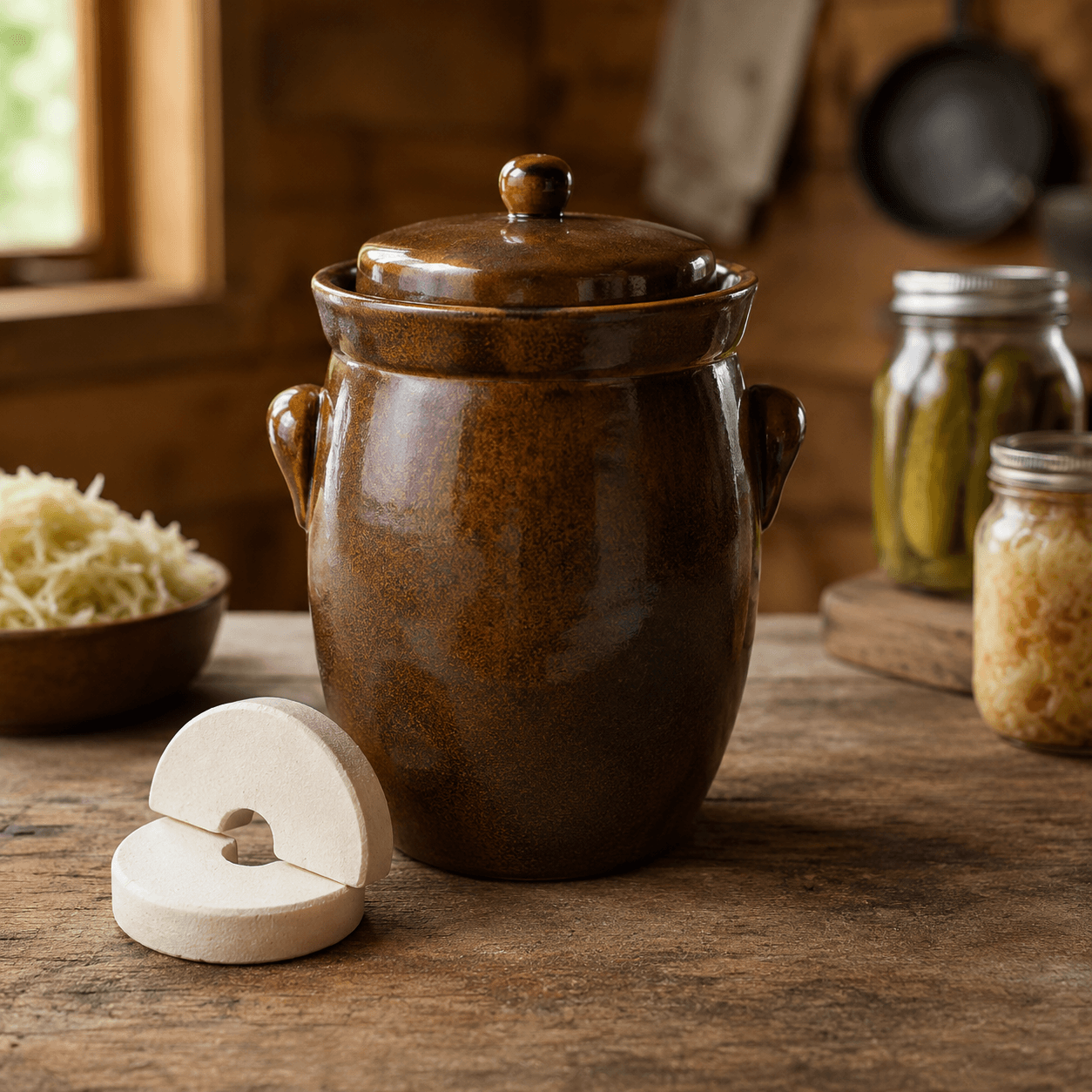
Fermentation Crock
Salt, cabbage, and time make food that keeps for months, with no vinegar, no canning, and no power.
Value Ratio
8.5/10
Versatility
7.5/10
Impact
8.0/10
Durability
9.0/10
Difficulty
2.5/10
Recommended Form5L water-sealed stoneware crock with weights
Best UsedCool, dark, steady temperature
ImportanceHigh
DifficultyBeginner
Salt picks the winnersSalt at 3.5% of the water's weight, about 35g per litre, makes a brine the spoilage microbes can't take but the lactic acid bacteria can. The salt doesn't season the food, it decides which microbes live.
No air, or it mouldsThe bacteria work without oxygen, so weights hold the vegetables under the brine. Whatever touches the surface air grows mould. Staying submerged is the one rule that matters.
The sour is the safeThe bacteria turn the vegetables' sugars into lactic acid until the pH drops below about 4, where almost nothing else survives. The same acid that makes it sour is what keeps it safe.
Live cultures, better digestion
Runs alone after the first day
Lasts decades, costs little
- Raised Garden BedShelter & Build
- Pressure CannerPreservation
- Root Cellar
Keep everything under the brine; the surface air is where mould starts.
Weigh the salt, don't eyeball it; that ratio is the safety margin.
White film (kahm yeast) is harmless; fuzzy or coloured mould means bin the batch.
Use non-chlorinated water and non-iodised salt, or the bacteria stall.
For vegetables, not meat; low-acid canning is the pressure canner's job.