RARITYARare
Hand Saw
A hand saw cuts wood and metal to length on muscle alone, no fuel, no power, no charge to run flat. From a fallen log to a steel pipe, the right blade turns it into the piece you need, and no single saw does it all.
Value Ratio
8.5/10
Versatility
7.5/10
Impact
6.0/10
Durability
8.0/10
Difficulty
2.0/10
Recommended FormBow saw for wood, hacksaw for metal; replaceable blades, teeth matched to the material
Best UsedOn firewood and metal, no fuel needed
ImportanceMedium
DifficultyBeginner
Bow sawFirewood, logs, and thick branches. Coarse aggressive teeth, replaceable blades for green or dry wood.
Pruning sawBranches and orchard work in tight spots. Curved blade, often folding for the pocket.
Panel sawTimber and boards for building. Coarse teeth for rough cuts, finer for clean ones.
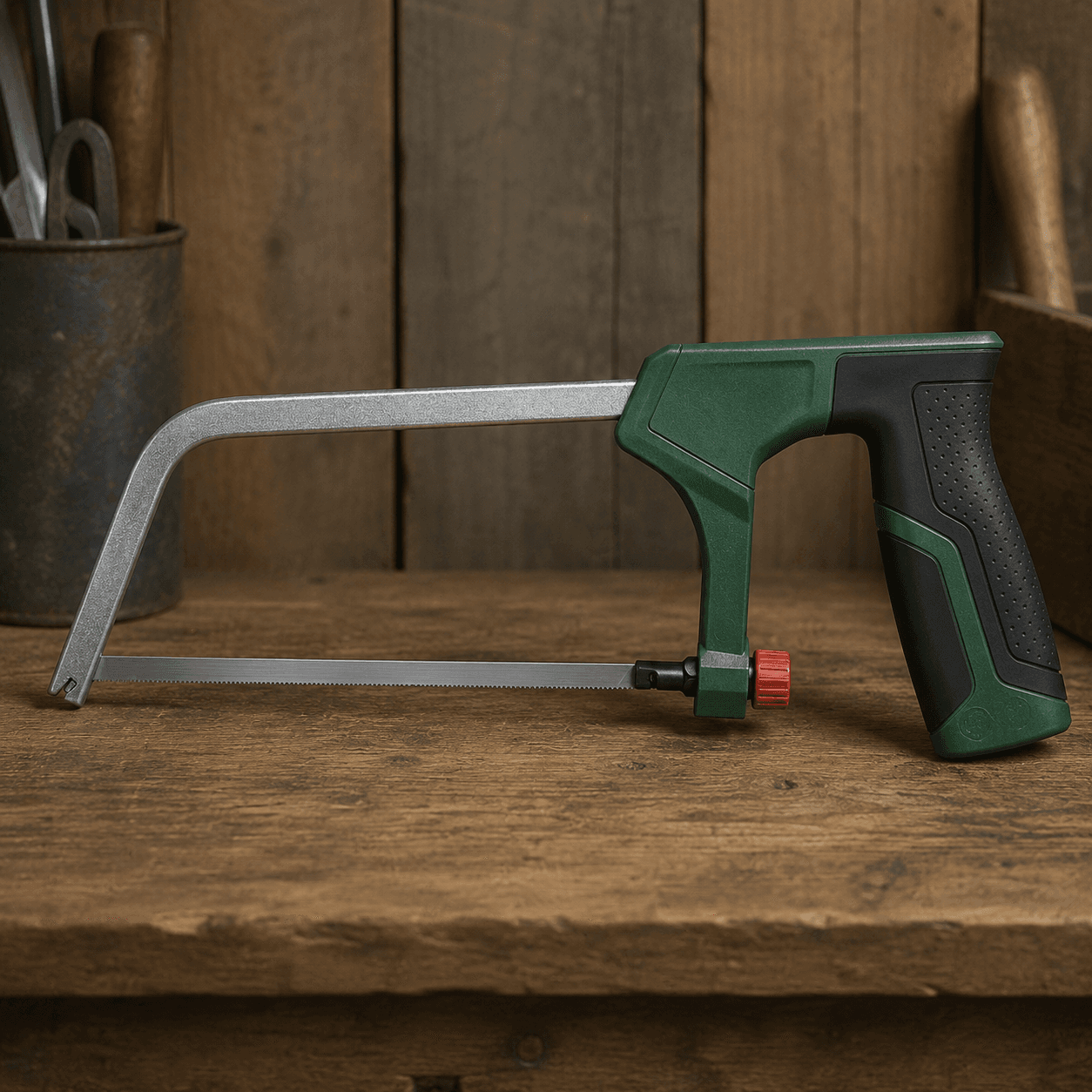
HacksawMetal: pipe, bolts, rod, and plastic. Fine tensioned blade, swapped to match the metal.
No fuel, no power, cuts anywhere
Right blade for wood, metal, or plastic
Swap the blade, the frame lasts a lifetime
- AxeTools
- Firewood RackShelter & Build
One saw won't do every job; a bow saw cuts firewood and a hacksaw cuts metal, and reaching for the wrong one means slow, ragged work or a stripped blade.
Match the teeth to the material; coarse, widely-spaced teeth for thick green wood, fine close teeth for metal and clean cuts.
Hardpoint, induction-hardened teeth stay sharp longest but can't be filed; when they dull you swap the blade rather than sharpen it.
Keep the blade tensioned and start the cut slow; a slack or rushed blade buckles, skips, and wanders off the line.