RARITYARare
Echinacea
Echinacea purpurea
The Prairie Immune Flower
HEALTH
POTENTIAL
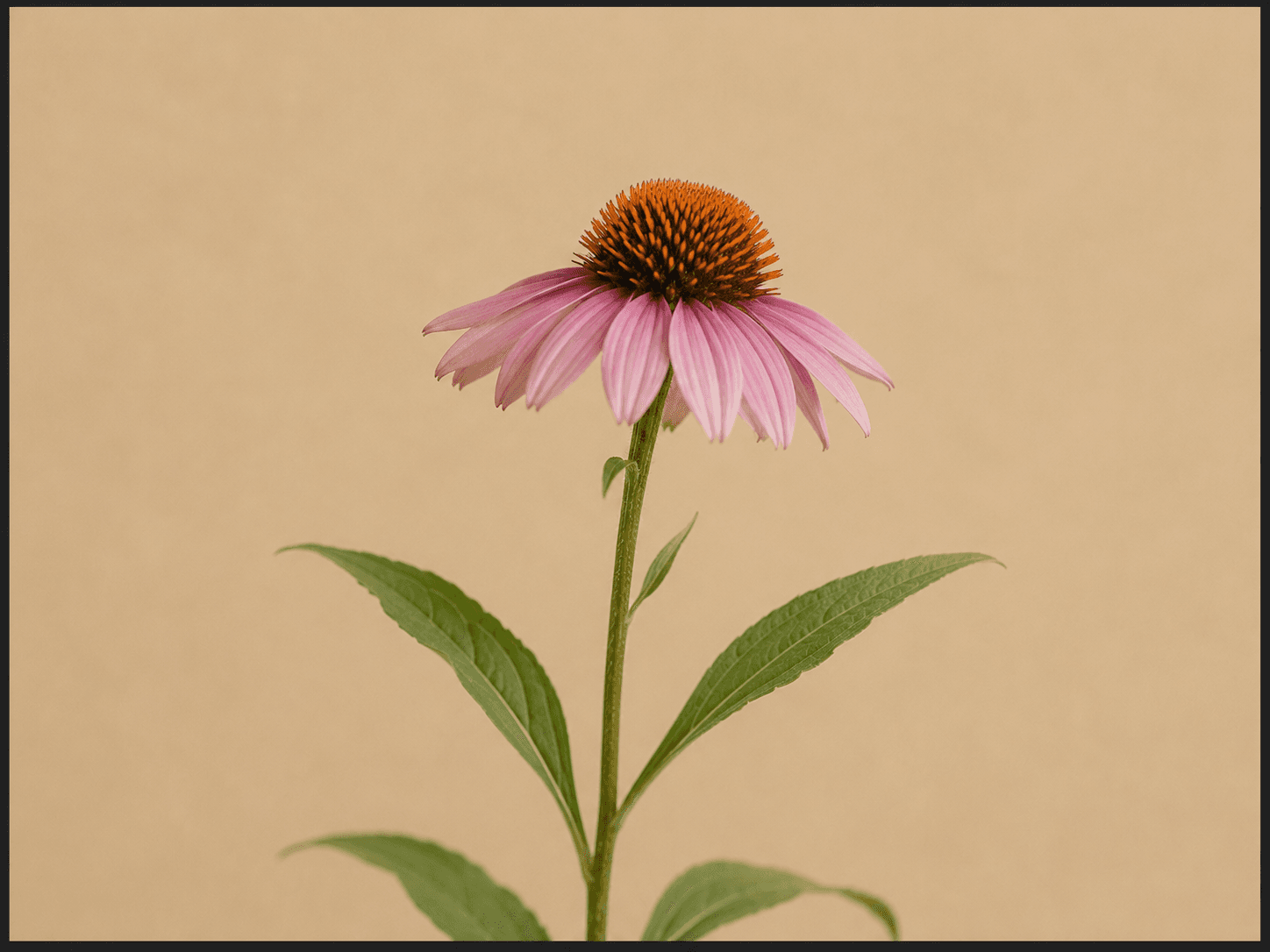
Echinacea is the purple coneflower people buy as a cold remedy and grow as a garden ornamental, usually without joining the two. It is a deep Plains-tribe medicine, a magnet for bees and butterflies, and a winter food source for finches. The cold evidence is the weakest part of its story. The rest of the plant gives more than the bottle suggests.
The Rooms
THE GIFTSBody, kitchen, material, living world — what the plant gives.
LAYERSThe biography — past, present, future.
GOLD MINEThe action ladder — free moves to deeper plays.
- People allergic to the daisy family (ragweed, chamomile, marigold) can react to echinacea. Start small.
- It is traditionally avoided in autoimmune conditions and alongside immune-suppressing medication, since it acts on the immune system. Check with a doctor first.
- Keep expectations honest. The cold evidence is weak, so treat it as a supportive tradition, not a cure.
- Identify the plant before using the root. Buy from a named Echinacea purpurea, angustifolia, or pallida source rather than a mystery coneflower.
- Treat a strong daily extract like a supplement, not like food.