RARITYBUncommon
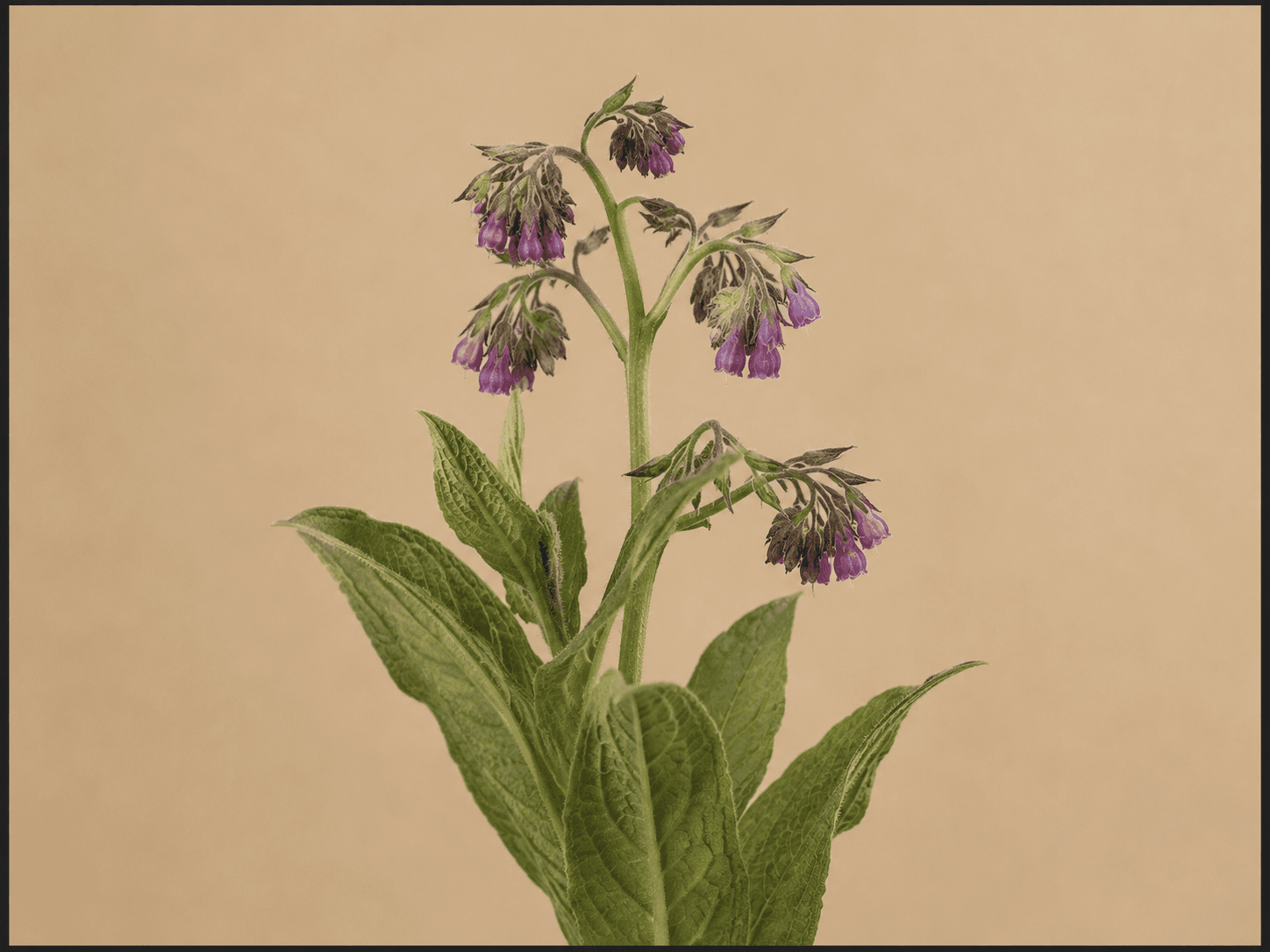
Comfrey
Symphytum officinale
The Gardener's Engine
HEALTH
POTENTIAL
Comfrey is the gardener's powerhouse. Its deep roots mine minerals from far underground and pack them into fast-growing leaves that make a free liquid feed, a rich mulch, and a compost booster. It carries a deep healing tradition as knitbone too. The catch is serious: comfrey contains liver-toxic alkaloids, so the modern rule is external use only, and never eaten.
The Rooms
THE GIFTSBody, kitchen, material, living world — what the plant gives.
LAYERSThe biography — past, present, future.
GOLD MINEThe action ladder — free moves to deeper plays.
- Never eat comfrey or drink it as a tea. It contains pyrrolizidine alkaloids that are toxic to the liver and can cause cancer. Internal comfrey products were pulled from sale for this reason.
- Use it on the body for external balms only, on unbroken skin, for short periods. Do not use it on open or deep wounds, where it can heal the surface over an unhealed inside and trap infection.
- Do not use comfrey on the skin during pregnancy or breastfeeding, on children, or if you have liver disease. Some alkaloids are absorbed even through intact skin.
- Its main safe use is in the garden, as fertilizer, mulch, and compost. Treat the medicinal use as a careful, optional extra, not the headline.
- Plant the sterile Bocking 14 cultivar in gardens. The wild seeding type spreads and is very hard to remove.
- Wear gloves when cutting. The leaf hairs can irritate the skin.